


How to Choose the Right Onsite Marketing Software for Conversion and Retention
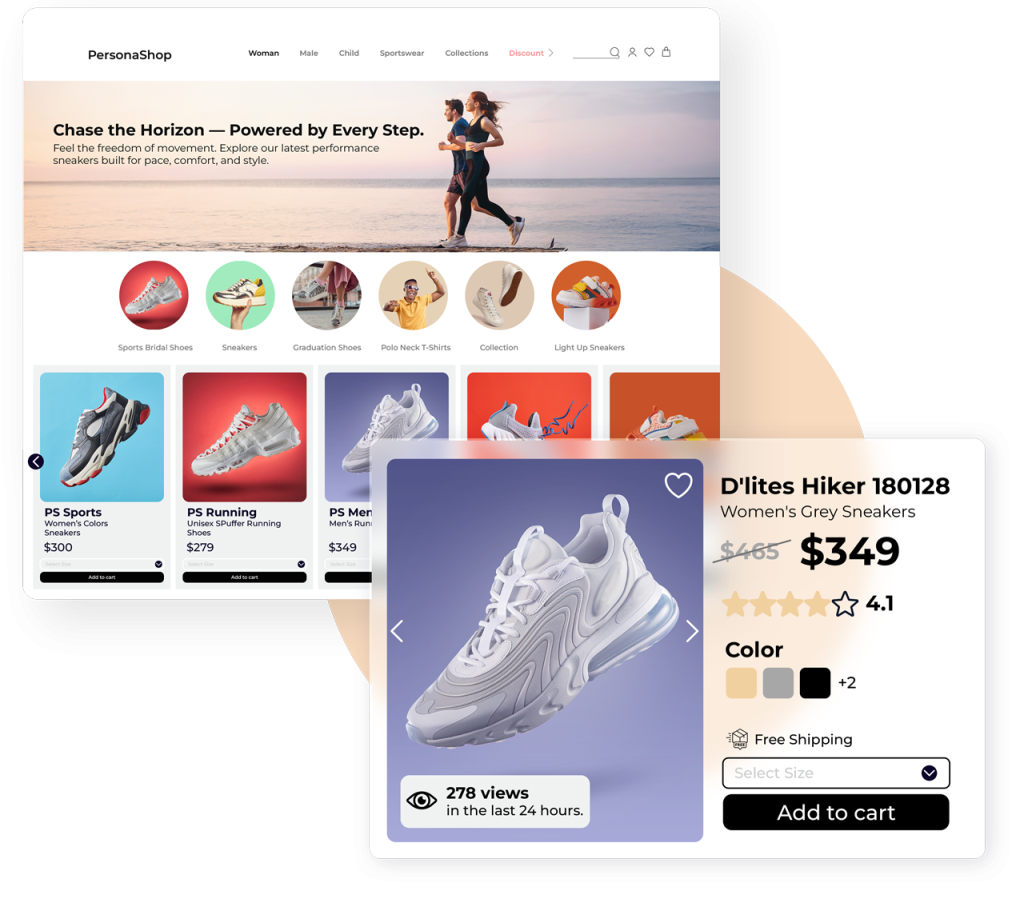
Onsite marketing software has quietly moved from a tactical add-on to a structural growth layer. Teams rarely wake up one day and decide to buy it. They arrive there after realizing that traffic alone does not convert, personalization done late in the funnel does not stick, and offsite channels cannot compensate for weak onsite experiences. Onsite marketing tools include popups, banners, chatbots, specialized landing pages are some of the examples. These tools are valuable when they directly contribute to conversion or other marketing metrics. For instance, popups paved the way for customers coming back to the website once they see the popup according to the findings.
Once businesses decide whether to leverage onsite marketing in their overall marketing strategies, they should decide which to use. Therefore, the right solution to the right problem is significant. Choosing onsite marketing software, therefore, is not about features or surface-level engagement tools. It is about deciding how your website or app behaves when real users with real intent arrive. That decision affects conversion rates, retention curves, and long-term customer value, even though its impact is often invisible in the early weeks.
How to Choose the Right Onsite Marketing Software by Understanding Its Core Elements
Onsite marketing software is built on a set of core elements that determine whether it can actually influence behavior or only decorate pages. At its foundation, it needs the ability to recognize users across sessions, react to behavior in real time, and trigger relevant experiences without manual intervention.
Beyond targeting rules and visual components, strong onsite marketing software includes behavioral tracking, segmentation logic, trigger-based orchestration, and measurable outcomes. These elements work together. If one is missing or weak, the system becomes reactive instead of adaptive.
In practice, the most important element is not the visible widget. It is the decision engine behind it. That engine decides who sees what, when, and why, based on live signals rather than assumptions.
How to Choose the Right Onsite Marketing Software Based on Its Market Positioning
Onsite marketing software is positioned at the intersection of conversion optimization, personalization, and lifecycle engagement. It is not purely a CRO tool, and it is not a full customer engagement platform on its own.
The strongest platforms position onsite marketing software as a real-time interaction layer that complements CRM, CDP, and automation systems. It sits where intent is expressed most clearly, on the site or in the app, and translates that intent into action.
When evaluating positioning, it helps to ask a simple question. Is this software designed to interrupt users, or to respond to them. Platforms built around interruption usually optimize for clicks. Platforms built around response tend to optimize for outcomes such as conversion quality and repeat behavior.
How to Choose the Right Onsite Marketing Software by Evaluating Its Core Benefits
The core benefits of onsite marketing software go beyond short-term conversion lifts. At a strategic level, it helps businesses reduce friction at decision moments, guide users toward relevant paths, and reinforce value after the first interaction.
Conversion improves when users see relevance instead of repetition. Retention improves when post-purchase and post-engagement experiences feel intentional rather than generic. Onsite marketing software supports both by ensuring that the website or app adapts as the relationship evolves.
A less obvious benefit is organizational clarity. When onsite interactions are systemized, teams stop guessing which experiences work. They can test, measure, and refine without rebuilding pages or relying on engineering for every change.
How to Choose the Right Onsite Marketing Software When Comparing Different Brands
Different brands position onsite marketing software through very different lenses. Some emphasize design flexibility, others emphasize campaign volume, and others focus on AI-driven personalization.
The comparison becomes misleading when brands are evaluated feature by feature instead of system by system. Two platforms may both offer popups, banners, or recommendations, yet differ radically in how they decide when to show them and how they measure impact.
A useful way to compare brands is to look at how deeply onsite marketing is integrated into their data and orchestration layers. If onsite actions live in isolation, the software will struggle to influence retention. If they are connected to broader customer intelligence, onsite marketing becomes a continuation of the relationship rather than a standalone tactic.
How to Choose the Right Onsite Marketing Software Using Clear Selection Criteria
Choosing onsite marketing software requires criteria that reflect long-term use, not just initial activation. Real-time data handling, segmentation depth, and trigger flexibility are essential, but they are not enough on their own.
Scalability matters when traffic grows and use cases multiply. Governance matters when multiple teams operate campaigns simultaneously. Measurement matters when conversion and retention need to be attributed with confidence rather than assumed.
Another critical criterion is adaptability. Onsite marketing software should evolve as your business model evolves. Rigid systems often perform well in early stages and become obstacles later when personalization needs to mature.
How to Choose the Right Onsite Marketing Software Through PersonaClick Use Cases
PersonaClick approaches onsite marketing software as a behavior-driven system rather than a visual layer. Use cases start with intent detection and end with measurable outcomes, not impressions alone.
In ecommerce, PersonaClick uses onsite marketing software to react to browsing depth, cart value, and product affinity in real time. This allows product recommendations, search personalization, and targeted onsite messages to work together instead of competing for attention.
In automotive and high-consideration journeys, onsite marketing software is used to support decision confidence. PersonaClick enables form optimization, exit-intent logic, and personalized follow-ups that respect longer evaluation cycles.
Across industries, PersonaClick connects onsite marketing software with segmentation, CDP insights, and marketing automation scenarios. This ensures that onsite actions are informed by past behavior and influence future engagement, closing the loop between conversion and retention.
