Discovery
Track Customer Loyalty with NPS
Customer loyalty is not only reflected in behavior, but also in how customers feel about their experience. Net Promoter Score (NPS) provides a structured way to capture this sentiment and connect it with business outcomes such as retention, churn, and long-term engagement. When integrated into a broader customer data system, NPS becomes more than a survey metric. It becomes a continuous feedback mechanism that informs decisions across marketing, product, and customer experience.
NPS Definition
What Is NPS (Net Promoter Score)?
Net Promoter Score (NPS) is a customer experience metric used to measure how likely customers are to recommend a company, product, or service. PersonaClick addresses this by integrating NPS directly into its Customer Data Platform (CDP). Every score becomes part of the customer profile, enabling real-time NPS data tracking, seamless integration, and actionable customer insights.
Real-Time NPS Tracking
Monitor customer sentiment instantly across web, mobile, and store experiences.
Seamless Integration
Connect NPS with your CDP, CRM, or automation flows for contextual actions.
Actionable Insights
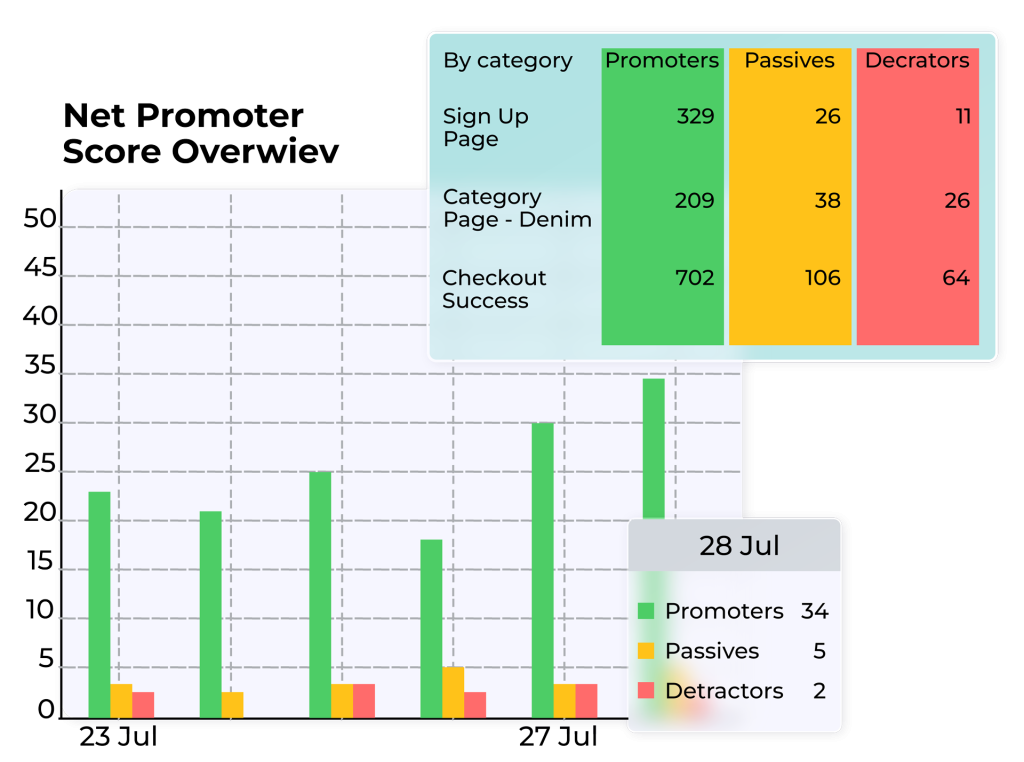
Turn feedback into strategy with dynamic dashboards and segment-based reporting.
Customer Insights
Connect NPS Data with Customer Behavior
NPS becomes significantly more valuable when it is combined with behavioral data. With PersonaClick, feedback is not stored separately. It becomes part of a unified customer profile, allowing organizations to:
-
relate sentiment to purchase behavior
-
identify patterns behind churn or loyalty
-
track how experiences influence satisfaction over time
Strategy Building
Turn NPS Insights into Actionable Strategies
A 0-10 scale is just the beginning. PersonaClick connects feedback data directly with customer profiles turning raw sentiment into structured data for smarter decisions.
-
Group feedback by channel, timing, or journey stage
-
Spot sentiment changes after campaigns or interactions
-
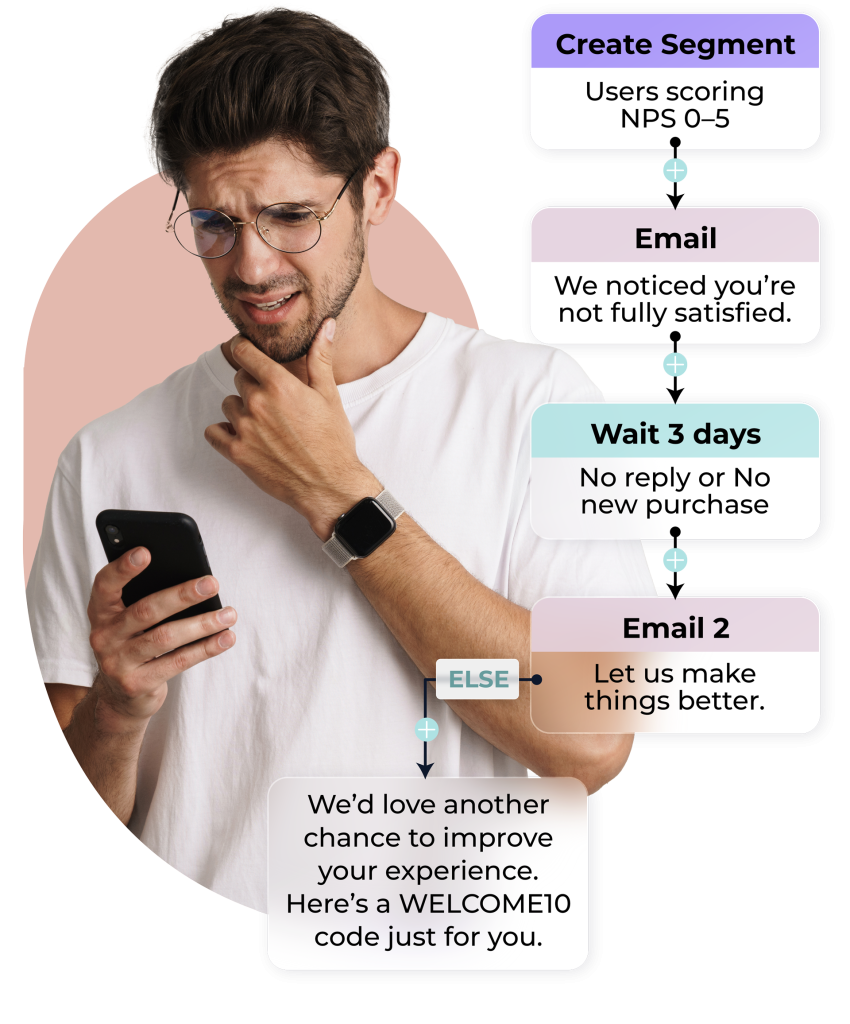
Automate follow-ups based on NPS scores
Actionable Customer Feedback
Integrate NPS Into Your Customer Data
One of the main limitations of traditional NPS tools is fragmentation. Feedback often exists separately from customer data, making it difficult to use effectively. PersonaClick addresses this by integrating NPS directly into its Customer Data Platform (CDP). Every score becomes part of the customer profile, enabling:
-
Real-time personalization based on sentiment
-
More accurate segmentation
-
Coordinated communications across channels
Let NPS Power Customer Experience
Understanding customer sentiment is just the start. What you do with it defines your success. PersonaClick’s NPS insights help you identify promoters, address pain points, and shape experiences that strengthen retention and drive revenue.
A single, powerful,
easy-to-use platform
Our mission is to help businesses grow by creating stunning websites that help them standout.
FAQ Section
Frequently Asked Questions about NPS
Find answers to common questions about NPS, its definition, its calculation, how to leverage it, and how to improve NPS scores across industries.
NPS (Net Promoter Score) is a customer experience metric used to measure how likely customers are to recommend a company, product, or service. It is based on a single question and categorizes customers as promoters, passives, or detractors, helping businesses understand overall customer loyalty and satisfaction.
NPS is calculated by subtracting the percentage of detractors from the percentage of promoters:
NPS = % of Promoters – % of Detractors
Customers who give a score of 9–10 are promoters, 7–8 are passives, and 0–6 are detractors. The final score ranges from -100 to +100.

A good NPS score depends on the industry, but generally 0–30 is considered acceptable. 30–50 is strong., while 50+ is considered excellent. In practice, tracking improvement over time is more important than comparing absolute scores across industries.
NPS is important because it connects customer sentiment with business outcomes such as retention, churn, and growth. Companies use NPS to identify dissatisfied customers, improve experiences, and increase long-term customer loyalty.
NPS can be improved by identifying the reasons behind customer dissatisfaction and acting on feedback. This typically involves improving customer experience, personalizing communication, reducing friction in journeys, and responding quickly to negative feedback.