

How to Choose the Right Marketing Automation Software for Smarter and Faster Customer Engagement
Choosing the right marketing automation software is one of the most important decisions a brand can make today. Customer journeys are no longer linear. Shoppers browse on mobile, compare on desktop, save items for later, jump between search and social, and expect brands to respond instantly. Manual marketing simply cannot keep up with this pace.
This is why selecting the right marketing automation software isn’t about features, but it’s about choosing the system that will guide your customer experience, orchestrate journeys intelligently, and reduce the operational load on your team. The wrong choice leads to complexity, inconsistent communication, and data fragmentation. The right choice creates clarity, speed, and a unified customer story.
Here’s how to evaluate marketing automation software with confidence.
1. Review How Much Manual Work Your Team Is Doing without the Marketing Automation Software
Before choosing a marketing automation software, look at how much of your team’s time is spent on tasks that should not be done manually. Many companies still rely on repetitive workflows: preparing weekly emails by hand, sending SMS messages manually each time an event occurs, copying last month’s campaigns “as a template,” or keeping Excel lists open as a central source of truth.
This way of working creates lag. A customer abandons their cart at 2 PM, but the team’s next manual campaign goes out tomorrow morning. Someone browses a new category today, but the email recommendation arrives a week later. When manual work dominates the workflow, brands always respond too late.
Your marketing automation software should eliminate this delay. The ideal system triggers communication automatically based on behavior, not schedules. This shift from manual effort to automated intelligence is the foundation of modern engagement.
2. Evaluate Whether the Marketing Automation Software Eliminates Spreadsheet & Compliance Risks
Most marketing mistakes come from manual data handling. Exporting Excel lists, uploading them into bulk SMS providers, forgetting to remove unsubscribed users, or mixing transactional and promotional contacts in the same file, hence these errors create real risk.
In markets operating under GDPR, KVKK, or İYS, manual list management can lead to serious compliance issues. An accidental promotional SMS sent to a customer who opted out is not just a bad experience; it can be a legal violation.
A strong marketing automation software automatically manages consent, suppresses unsubscribed contacts, removes duplicates, and validates data before sending anything. It protects your brand’s reputation by ensuring that no manual mistake leads to a compliance breach.
If the platform still requires spreadsheet uploads or manual partitioning of promotional and transactional audiences, it is not the right choice.
3. Assess How Well the Marketing Automation Software Automates All Channels
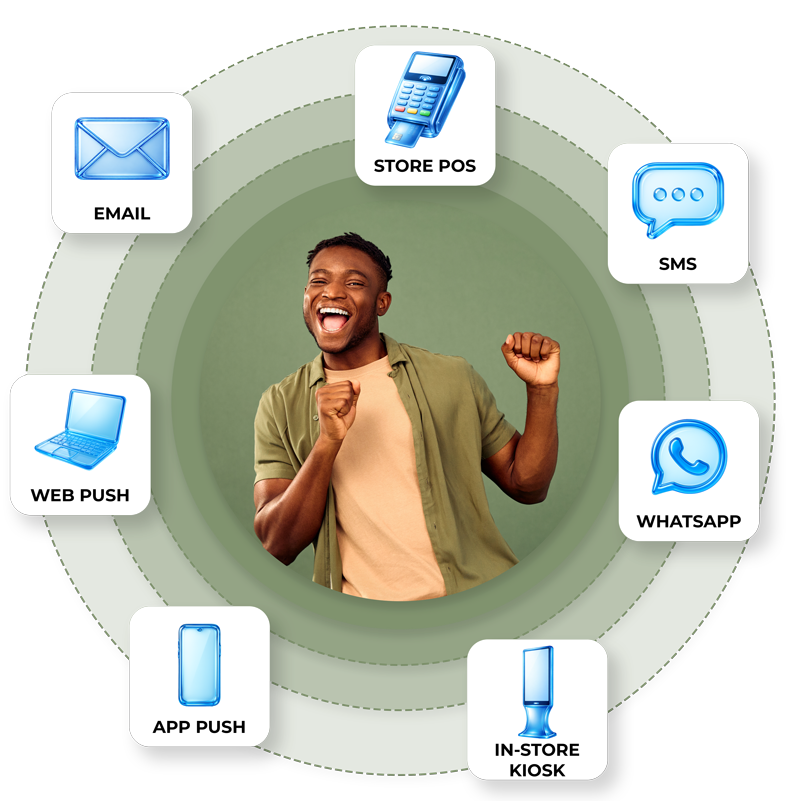
True marketing automation goes beyond email. The software must orchestrate a seamless cross-channel experience across SMS, push notifications, email, web personalization, and transactional communication.
Customers interact with brands across multiple touchpoints. They browse on-site, abandon from mobile, explore prices on desktop, then return days later through a push notification or email. Your marketing automation software must handle this complexity with ease.
Ask yourself:
- Does it automate SMS based on real-time events?
- Does it trigger push notifications when customers revisit or drop off?
- Can it personalize emails based on browsing or purchase behavior?
- Does it enrich transactional messages without delay?
- Does it allow channels to talk to each other so the customer doesn’t receive duplicate messages?
If the system only automates one channel well, you will eventually outgrow it. The right choice creates a synchronized, unified journey.
4. Ensure the Marketing Automation Software Supports Segmentation at a Behavioral Level
A marketing automation software is only as intelligent as its segmentation. Many platforms offer simple segmentation fields (location, age, device), but these do not reflect customer intent.
Modern engagement requires segmentation built on behavior:
- Which products they viewed
- How recently they visited
- What they added to cart
- What they abandoned
- What they purchased
- Whether they returned
- Whether they showed price sensitivity
- Whether they are at risk of churn
Segmentation should update automatically, not through manual refreshes or scheduled imports. If your marketing automation software cannot adapt segments based on real-time activity, personalization becomes impossible.
Behavior-driven segmentation is the engine of relevance, which generates revenue.
5. Look for True Data Unification, Not Patchwork Integrations in the Marketing Automation Software
Marketing automation requires a single, consistent view of the customer. If data about website behavior lives in one tool, cart activity in another, email engagement in a third, and app behavior in a fourth, automation becomes fragmented.
The right marketing automation software must unify:
- Browsing data
- Cart and checkout events
- Wishlist activity
- Search behavior
- Email engagement
- SMS interactions
- Push notification responses
- Purchase history
- RFM and lifecycle signals
When everything flows into one customer profile, automation can act intelligently at every micro-moment. Without unified data, the automated journeys will always be incomplete.
6. PersonaClick: A Marketing Automation Software Built on Unified Intelligence
PersonaClick brings marketing automation, segmentation, CDP-level unification, and multi-channel orchestration into one connected ecosystem. Instead of juggling multiple tools, brands operate from a single platform where every customer action; from browsing to wishlist, from cart to purchase, from return visits to churn signals; is captured instantly.
PersonaClick automates:
- Email flows
- SMS sequences
- Push notification journeys
- Onsite personalization
- Product recommendations
- Behavioral triggers
- Customer lifecycle flows
Because the system understands customers in real time, every automated message feels relevant and timely. No delays. No guesswork. No manual uploads. Just continuous, intelligent engagement. Moreover, the platform also ensures that every communication respects user consent automatically with built-in compliance logic for GDPR, KVKK, and İYS.
PersonaClick is not just a marketing automation software; it is a growth engine powered by unified behavioral data.
Conclusion: Choose a Marketing Automation Software That Thinks, Learns & Acts for You
The right marketing automation software should simplify your life, strengthen your customer experience, eliminate compliance risks, and scale your communication without adding pressure on your team. It should transform endless manual effort into automated intelligence, and fragmented customer data into a unified understanding.
Choosing the right platform means choosing efficiency, clarity, and long-term revenue growth.
✨ Ready to experience marketing automation that adapts to your customers in real time?
Book a Demo and discover how PersonaClick transforms data into fully orchestrated journeys.
