
How to Choose the Right Personalization Software for Meaningful, Data-Driven Customer Experience
Choosing the right personalization software has become one of the most strategic decisions a company can make. Customers today expect digital experiences to adjust to their behavior instantly. They want a website that remembers what they viewed, product recommendations that reflect their taste, emails that feel tailor-made, and notifications that arrive at the right moment. Personalization is no longer a “nice-to-have.” It is the foundation of modern customer experience.
But personalization only works when the software behind it understands the customer deeply. This means collecting real-time data, reacting to subtle behavioral signals, and adapting experiences without delay. Many brands rush into personalization tools without considering the deeper question: Which personalization software can understand our customers well enough to treat them as individuals?
Start With Real-Time Customer Insight in Your New Personalization Software
Personalization begins with understanding. However, true understanding requires real-time data. When personalization software relies on delayed updates or scheduled syncs, it simply cannot keep up with the customer’s journey. A shopper who just explored a new category should see relevant content immediately, not after a batch update three hours later. The right personalization software must collect browsing behavior, product views, cart actions, wishlist activity, search terms, and device transitions the moment they happen. Personalization isn’t a feature; it’s a living dialogue between brand and customer.
Focus on How the Personalization Software Makes Recommendations, Not Just What It Shows
Every personalization software promises recommendations. The real question is how the software decides what to recommend. Some engines depend entirely on rules, which makes the experience predictable and often repetitive. Others rely only on algorithms, which can produce suggestions that feel distant or disconnected from business priorities. The strongest personalization software blends both: rules that protect brand strategy and AI that adapts to customer behavior. This hybrid approach creates recommendations that feel human, relevant, and supported by real intelligence rather than guesswork.
Look Beyond Basic Segmentation in Your Personalization Software
Segmentation determines whether personalization feels precise or superficial. If a software only allows segmentation by simple factors like gender, city, or age, it will fail to reflect real customer intent. Modern brands need personalization software that updates segments automatically based on how customers behave.
This means grouping customers by recency, frequency, value, browsing depth, category interest, engagement level, price sensitivity, and lifecycle stage. A customer who interacts three times in the same week should shift into a high-intent profile. A returning customer who suddenly decreases activity should be identified instantly. Personalization must mirror the customer’s rhythm, which requires a software capable of deep behavioral segmentation.
Ensure Personalization Software Extends Across Every Channel, Not Just the Website
Many personalization tools focus entirely on website experiences. While onsite personalization is important, it represents only a fraction of the overall journey. Customer experiences today span across email, SMS, push notifications, and mobile apps. The right personalization software must carry the same logic and customer understanding into all these channels.
If the software can personalize the website but cannot adapt email content, or if it understands browsing behavior but cannot influence SMS triggers, the journey becomes fragmented. Personalization must follow the customer everywhere, creating a sense of continuity that strengthens both trust and conversion.
Consider How Easy It Is for Your Team to Use and Iterate Personalization Software
Personalization software should empower marketing teams, not slow them down. If launching personalized experiences requires heavy development support, large IT involvement, or long implementation cycles, the system will eventually block progress. Marketers need to adjust banners, update recommendation blocks, create new experiences, and refine logic without waiting for technical intervention.
The right personalization platform should feel intuitive. It should allow teams to act quickly, adjust content easily, and experiment without fear. Personalization thrives on iteration — a process that must be as simple and accessible as possible.
Choose Personalization Software That Unifies Customer Data Into a Single View
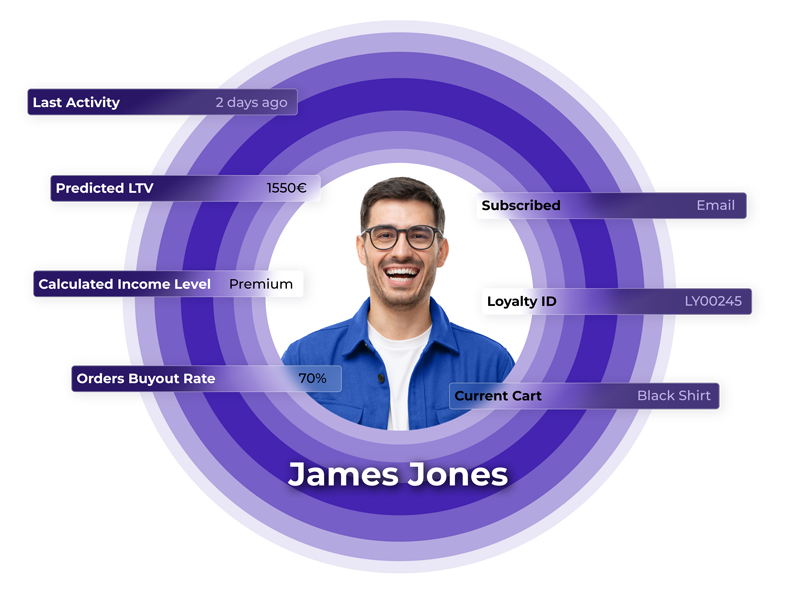
Unifying data is arguably the most overlooked aspect of choosing personalization software. Even the most advanced recommendation engine becomes ineffective if it relies on fragmented data. A shopper might browse on mobile, compare on desktop, open an email later, and receive a push notification in between. If these actions are stored in separate systems, the personalization software cannot see the full picture.
The right solution unifies data across channels — web, app, CRM, email, SMS, push, and offline behaviors — into one profile. This unified understanding allows the personalization engine to adapt fluidly, ensuring that every experience reflects the customer’s journey, not isolated actions.
Respect for Consent, Privacy, and Customer Trust by the Right Personalization Software
Personalization walks a delicate line. Customers want relevance, but they also expect privacy and transparent data handling. The personalization software you choose must respect consent frameworks like GDPR, KVKK, and IYS. It should handle opt-ins and opt-outs automatically, protect customer preferences, and avoid using data that the customer has not authorized. It is important to note that trust is earned through precision and responsibility. The best personalization software protects both.
Why PersonaClick Is the Ideal Personalization Software for Customer-Centric Brands
PersonaClick as a personalization software, combines real-time behavioral tracking, unified data, advanced segmentation, onsite and offsite personalization, and multi-channel orchestration; all within one connected ecosystem. Instead of piecing together separate software for recommendations, email personalization, push messaging, and segmentation, PersonaClick offers a complete personalization environment that adapts instantly.
Because personalization unifies every behavioral signal, personalization becomes effortlessly consistent across websites, email, SMS, and push. Recommendations evolve in real time. Segments shift automatically. Experiences feel intuitive, fluid, and human. And because the platform is designed for marketers as much as engineers, teams can launch new personalized experiences in minutes, not weeks. PersonaClick isn’t just personalization software. It is a personalization engine which brings customer understanding to life.
Conclusion: Personalization Software Should Understand Your Customers Better Than Anyone Else
The right personalization software is not chosen for its features alone. It is chosen for its ability to understand customers deeply, react to their behavior immediately, and unify the entire journey across all channels. When personalization feels genuine — not forced — customers buy more, return more, and trust your brand more.
✨ Ready to deliver real-time personalization that feels human, timely, and intelligent?
Book a Demo and see how PersonaClick transforms customer behavior into meaningful, revenue-driving experiences.
