

Onsite Marketing: Turning Visitors into Loyal Customers
When you walk into a store, what’s the first thing you notice? The signs, the promotions, the “sale” banners that grab your attention and guide your experience. Onsite marketing works the same way, namely only online. The objective is not to interrupt visitors, but to support their decisions with relevant cues at the right moment. It’s about engaging visitors with the right message, at the right time, without overwhelming them. According to Capital One research, popups as an onsite marketing tool contribute nearly $80 billion in annual revenue to e-commerce businesses.
In this guide; we’ll explore what onsite marketing is, why it’s vital for e-commerce, and how segmentation and automation make your onsite experiences smarter and more effective.
What Is Onsite Marketing?
At its core, onsite marketing is about engaging your website visitors with relevant, personalized messages while they’re browsing. It focuses on responding to visitor behavior in the moment, rather than relying on delayed follow-ups or off-site channels. These messages are shaped by the visitor’s page context, past behavior, and real-time intent. Instead of relying only on emails or SMS, it connects with users directly on the page they’re viewing. This direct interaction allows brands to influence decisions while intent is still forming, not after the opportunity has passed.
Examples of onsite marketing:
Effective onsite marketing combines behavioral data, context, and timing to support the visitor journey without interrupting it.
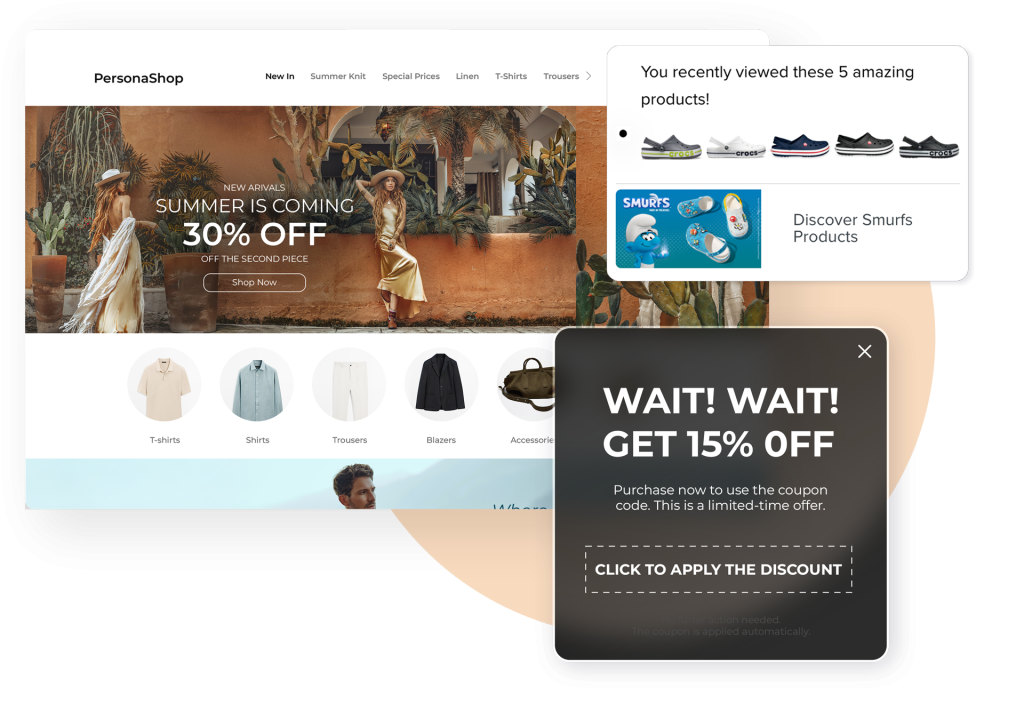
- Popups that greet visitors with offers or discounts
- Banners that promote special deals or highlight new arrivals
- Stories that showcase product launches or customer success
The goal is simple: Increase engagement, boost conversions, and elevate the overall customer experience without being intrusive. When implemented responsibly, onsite marketing enhances usability and clarity rather than adding friction. Each of these elements addresses a different decision point in the visitor journey. In this regard, popups often influence moments of hesitation, such as exit intent or price sensitivity. Banners support orientation by highlighting key actions or offers without interrupting navigation. Stories help visitors explore value at their own pace, reinforcing interest before commitment. For advanced control and real-time targeting, PersonaClick’s Onsite Marketing enables automated banners, popups, and recommendations powered by visitor behavior.
Popups, Banners, and Stories in Onsite Marketing
Popups That Convert
Popups grab attention, but the key is to use them smartly. Poorly timed popups can drive abandonment instead of engagement.
Use for: Time-sensitive offers, discounts, or exit-intent triggers (for instance, “Wait! Get 10% off before you go!”).
Pro Tip: Use exit-intent detection and allow easy closing to prevent frustration.
Smart popups powered by onsite marketing automation can increase conversion rates without harming user experience.
Banners That Guide the Onsite Marketing Journey
Banners are essential in onsite marketing because they deliver key messages seamlessly. When placed correctly, banners guide rather than distract.
Use for: Announcing sales, new collections, or free shipping offers.
Tip: Keep banners subtle; sticky banners at the top or bottom work best for visibility without disruption.
Stories That Engage Customers in the Onsite Marketing Context
Stories bring interactivity and storytelling to your onsite marketing strategy. They create motion, curiosity, and connection.
Use for: Highlighting brand stories, product features, or limited-time promotions.
Tip: Keep stories short, visual, and mobile-friendly.
The Power of Segmentation in Onsite Marketing
Segmentation isn’t just for email anymore; it’s the backbone of effective onsite marketing. Without segmentation, onsite marketing becomes a one-size-fits-all experience. Not every visitor has the same intent. Segmenting users allows you to personalize messages based on their behavior and journey stage.
Examples:
- New visitors: Offer a first-time discount or newsletter signup incentive.
- Returning visitors: Show product recommendations based on past browsing.
- Cart abandoners: Trigger exit popups with a discount or reminder.
- Loyal customers: Offer exclusive VIP deals or loyalty rewards.
Using PersonaClick’s Dynamic Segmentation, you can display tailored messages in real time, turning browsing into buying.
The Importance of Personalization in Onsite Marketing
Personalization transforms onsite marketing from generic to powerful. Visitors stay longer and decide faster when experiences feel designed for them. Shoppers expect tailored experiences; content, products, and offers that match their preferences.
Examples of Personalized Onsite Marketing:
- “Welcome! Get 10% off your first order” for new users.
- “Welcome back, [Name]! Explore new arrivals in your favorite category.” for returning customers.
- “Your VIP Reward Awaits!” for loyal shoppers.
By using behavior-based personalization, you create a smoother, more enjoyable customer journey that boosts engagement and loyalty.
Why Marketing Automation Makes Onsite Marketing Smarter?
Automation is the secret weapon behind next-generation onsite marketing. Its real strength lies in delivering different experiences to different visitors at the same time. It lets your website adapt instantly to visitor behavior, so no manual work needed.
How marketing automation enhances onsite marketing:
- Exit-intent popups: Trigger offers when users are about to leave.
- Time-based banners: Appear after a set period of browsing.
- Product recommendations: Update dynamically based on browsing patterns.
FAQs About Onsite Marketing
- What is onsite marketing?
Onsite marketing refers to engaging website visitors with personalized, context-aware messages while they browse, using elements such as popups, banners, and dynamic content to support real-time decision-making. - What is the main goal of onsite marketing?
To engage website visitors in real time with personalized, relevant messages that increase conversions and retention. - How does segmentation improve onsite marketing performance?
Segmentation ensures each visitor sees content aligned with their intent, whether it’s discovering new products or completing a purchase. - Is automation necessary for onsite marketing?
Yes. Automation allows you to scale personalization, delivering timely messages without constant manual setup. - How does onsite marketing handle data privacy and consent?
Onsite marketing operates based on behavioral signals collected within the website environment and must comply with privacy regulations such as GDPR and user consent preferences. Effective platforms ensure that personalization respects permission settings and adapts messaging accordingly. - How do you measure the success of onsite marketing?
Onsite marketing success is measured through engagement indicators such as click-through rates, conversion lift, and reduced bounce rates. More advanced analyses also evaluate the impact on repeat visits, purchase frequency, and long-term customer value. - What is onsite marketing software?
Onsite marketing software enables businesses to create, target, and automate personalized experiences directly on their websites based on visitor behavior, segmentation, and real-time signals.
The Bottom Line: Onsite Marketing is Real-Time
Onsite marketing is one of the most impactful ways to connect with customers in the moment. It’s not about shouting for attention; it’s about delivering relevant experiences that feel personal and timely. By combining segmentation, personalization, and marketing automation, you can turn every visit into an opportunity to build loyalty and drive revenue.
Ready to elevate your onsite marketing? Book a Demo to see how PersonaClick helps transform every visitor interaction into lasting customer relationships.
