


The Hidden Risks and Real Rewards of Implementing a CDP: What Brands Must Get Right
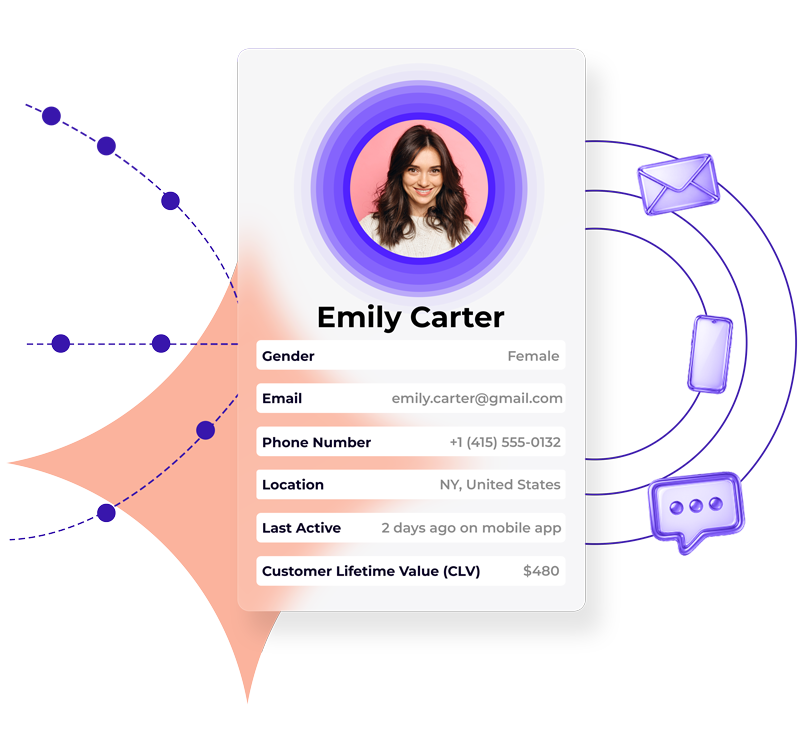
Many companies talk about unified data, but few realize how difficult it is to achieve clean, reliable, real-time information at scale. A CDP (Customer Data Platform) promises visibility, accuracy, and personalization; but only when it’s implemented with care. The truth is, a CDP is not a magic wand; it is an engine. And like any engine, feeding it the wrong fuel can cause more harm than good. Today, as companies depend on customer experience to differentiate themselves, the quality of their CDP determines the quality of every marketing touchpoint: emails, SMS campaigns, push notifications, onsite experiences, and long-term loyalty. The stakes have never been higher.
1. The Dangers of Wrong or Dirty Data Inside a CDP
Wrong data inside a CDP doesn’t just create reporting issues. On the contrary, it breaks customer experience. When identifiers conflict, when events are duplicated, when consent statuses are out of sync, when anonymous profiles fail to merge correctly, the CDP loses its ability to represent the customer truthfully.
Suddenly, customers receive abandoned-cart reminders even though they have already purchased them. They see irrelevant recommendations. They get emails for categories they’ve never browsed. They receive SMS campaigns sent to outdated numbers. Marketing teams lose trust in their own dashboards. Leadership questions the ROI of personalization. Customers lose confidence in the brand’s professionalism.
Dirty data also inflates or distorts metrics. Teams believe campaigns are performing when they’re not, or think segments are large when they are actually fragmented. Poor data inside a CDP doesn’t simply create confusion; it creates organizational blindness. This is why the first rule of working with a CDP is simple: a CDP is only as good as the data you give it.
2. What to Pay Attention to During CDP Integration
A successful CDP integration requires discipline, alignment, and clarity. Companies must begin by mapping every data source, which includes website, mobile app, CRM, an offline system, email provider, SMS gateway, consent management tool, and understanding what each contains, what overlaps exist, and how identifiers will merge.
Identity resolution is the heart of a CDP. This means deciding which identifiers matter: email, phone number, device ID, cookie, loyalty number, or another unique key. Without a clear identity strategy, the CDP creates duplicates instead of unified profiles.
Data governance also becomes essential. Which events matter? Which should be ignored? Which fields must be standardized? What happens when external systems send outdated information? Brands must define rules for naming conventions, event structures, and attribute freshness.
PersonaClick CDP simplifies much of this through automated mapping and conflict resolution, but even then, companies must think intentionally. A CDP is not “plug-and-play”; it is “plug, understand, and grow.”
3. How to Handle Manual Data Problems and Internal Resistance
Every organization faces the same cultural challenge during CDP adoption: the shift from manual, spreadsheet-driven habits to automated, real-time data flows. Teams who have spent years relying on manual exports and hand-built segments often feel uncertain or even threatened when a CDP promises automation.
This resistance is normal. Not everyone trusts new systems immediately. Some fear losing control. Others fear exposing inconsistencies in their older processes.
The solution is not forcing a new system but demonstrating its clarity. When marketing teams see that the CDP updates segments instantly, merges identities correctly, reduces errors, and eliminates repetitive tasks, adoption becomes natural. When leadership sees cleaner dashboards and more predictable growth, the organization shifts from resistance to enthusiasm.
A CDP should not replace people. Instead, it should replace repetitive labor, giving teams more time for strategy, creativity, and experimentation. Showing this value early is critical in overcoming internal hesitation.
4. How a CDP Feeds Email Marketing, SMS Marketing & Push Notifications
Email Marketing
A CDP enriches email marketing by turning static lists into living, evolving audiences. Instead of sending the same content to everyone, the system updates segments based on what customers actually do: the pages they view, the products they compare, the items they add to their carts, the categories they revisit, and the signals they give through purchase frequency or silence. When email campaigns reflect real behavior instead of assumptions, open rates, click rates, and conversions rise naturally. A customer who just explored skincare shouldn’t receive emails about kitchenware. A CDP solves this instantly by aligning message relevance with true intent.
SMS Marketing
SMS marketing depends entirely on timing and accuracy. A CDP ensures that brands send SMS messages only when they make sense and when they are absolutely necessary. Because the CDP knows the customer’s consent status, preferred channel, and behavioral sensitivity, SMS becomes more respectful, timely, and therefore more effective. Instead of blasting promotions blindly, the CDP powers SMS journeys that feel personal and timely.
Push Notifications
Push notifications work best when they acknowledge context and a CDP provides that context continuously. If a customer viewed product A three times, the push notification reflects that. If they added something to their wishlist, the notification follows up with meaningful updates. If they abandoned a cart, the push message addresses only what they left behind. A CDP transforms push from “one-size-fits-all alerts” into micro-moments that guide the customer gently back into the journey.
In all three channels, the CDP acts as the brain: the system that interprets signals, filters noise, updates segments, and ensures that every communication feels tailored, thoughtful, and aligned with the customer’s current state.
5. How a CDP Drives Revenue Growth Across the Entire Funnel
Revenue growth doesn’t come from louder marketing, but it rather comes from smarter marketing. A CDP increases revenue because it eliminates blind spots and allows brands to speak to customers based on what they care about at the moment. When personalization becomes real rather than decorative, customers convert faster, return more often, and feel understood at every touchpoint.
With unified profiles, brands no longer waste money showing irrelevant ads. With real-time segmentation, campaigns adapt automatically as the customer moves through different stages. With accurate behavior-tracking, product recommendations become significantly more persuasive. And with seamless integration into email, SMS, and push notifications, the entire customer lifecycle becomes connected rather than fragmented.
The result is higher AOV through better recommendations, higher conversion through relevant messaging, higher retention through intelligent reactivation, and lower churn through early detection of inactivity. A functioning CDP doesn’t simply support revenue, which multiplies it by making every action intentional.
Conclusion: A CDP Is the Foundation of Modern Customer Experience
A CDP is not just a tool. It is an organizational shift toward accuracy, intelligence, and real-time action. When fed with clean data, integrated with care, and embraced by teams, it becomes the most valuable source of truth in the company.
- It breaks down silos.It strengthens every channel, including email, SMS, push, onsite, app.
- It creates customer experiences that feel human, not mechanical.
- And above all, it drives revenue with consistency rather than guesswork.
Therefore, a CDP is the backbone of modern marketing, but only if brands treat it with discipline and respect.
✨ Ready to unify your customer data and build intelligent, revenue-driving experiences?
Book a Demo and see how PersonaClick makes CDP adoption seamless, accurate, and powerful.
