


How Onsite Marketing Boosts Sales and Customer Engagement on Ecommerce Websites
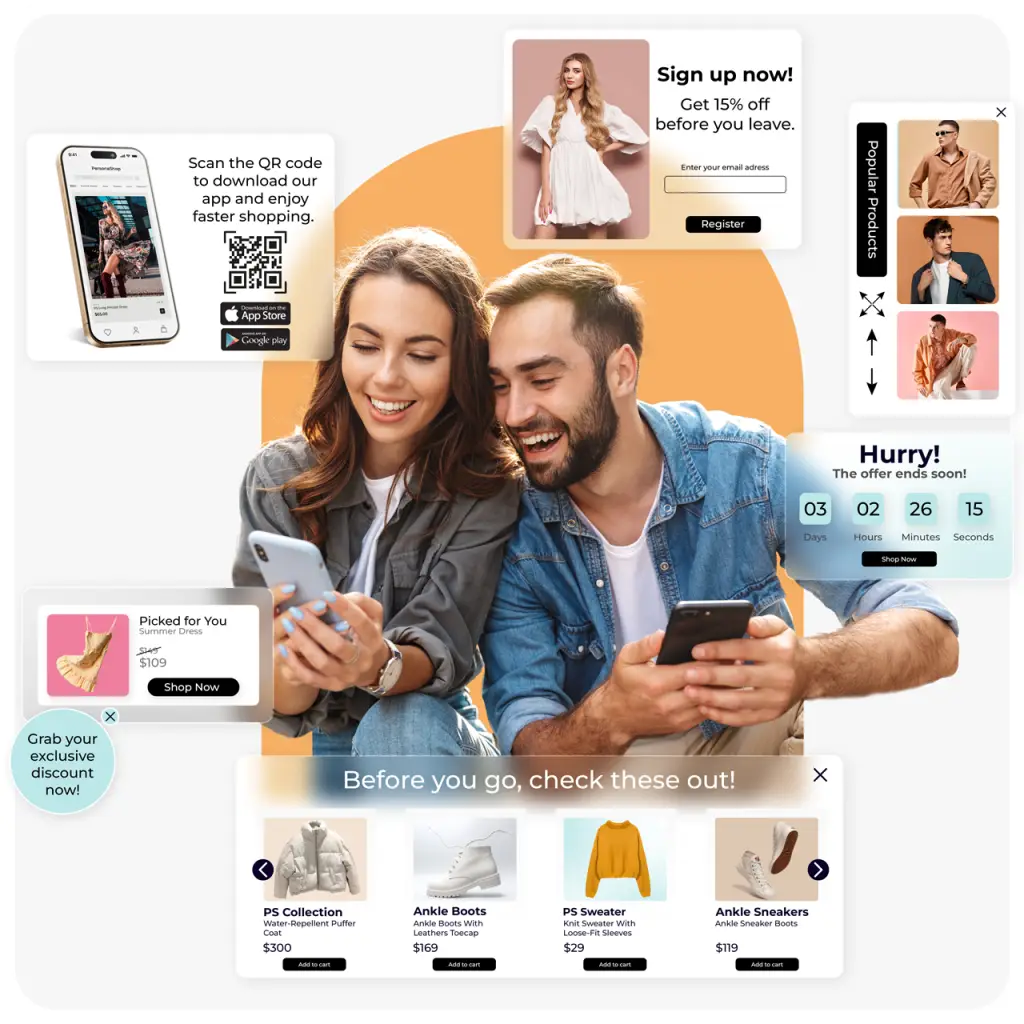
Most online shoppers decide within seconds whether they will explore a store, bounce, or buy. The design of the website matters, but what matters even more is what the customer sees, feels, and experiences during those first moments. That is where onsite marketing becomes one of the strongest levers for ecommerce growth. It influences decisions at the exact moment intent is formed. Research into onsite engagement consistently shows that optimized popups can drive double-digit conversion rates when aligned with visitor intent. (Source: onsite conversion research)
Unlike paid ads, email, or social media, onsite marketing reaches customers at the exact moment they are browsing your store right when they are closest to making a purchase decision. This immediacy gives onsite marketing a unique advantage over outbound channels. That is why e-commerce brands are shifting from static storefronts to dynamic, personalized shopping experiences powered by onsite marketing strategies that require minimal setup but drive maximum sales impact.
Why Onsite Marketing Is the Most Immediate Sales Driver
What makes onsite marketing uniquely powerful is timing. It operates when motivation is already high. When a customer is already on your website, they are engaged. They are evaluating. They are curious. They are considering options. Onsite marketing meets them in that moment; guiding, encouraging, and reassuring without waiting for them to leave the website or check their inbox. It reduces friction, displays relevance, and makes discovery effortless. Most importantly, onsite marketing does not require complex preparation or weeks of configuration. Simple rules based on browsing, cart activity, or time spent on a page can immediately influence behavior. As a result, ecommerce brands see conversion lifts not in months, but in days.
How Onsite Marketing Works Inside the E-commerce Experience
At its core, onsite marketing shapes what customers see during their session. It adapts the website environment to match their interests, actions, and hesitations. Every interaction updates the experience in real time.
- If a customer scrolls through new arrivals twice, onsite marketing surfaces matching items or offers.
- If they reach the cart and pause, onsite marketing reassures them through trust badges, delivery information, or low-in-stock signals.
- If they browse a category repeatedly, onsite marketing presents relevant bundles or best sellers.
By responding instantly to intent, onsite marketing transforms the website into a living, supportive shopping assistant. Each response is triggered automatically based on behavior.
Onsite Marketing for Personalization and Product Discovery
Onsite marketing helps customers find the right products faster by shaping product visibility around behavior. When shoppers explore a category, the onsite experience can highlight curated selections, trending pieces in that category, or complementary items frequently bought together. This reduces cognitive load and shortens the path from “browsing” to “adding to cart.” Customers spend less time searching and more time deciding. For example, someone who interacts with eco-friendly products may see a dedicated banner promoting sustainable collections. Likewise, a visitor returning to the website sees reminders of items they viewed earlier, eliminating the frustration of searching again. This fluid personalization builds convenience, which is one of the strongest drivers of conversion.
Reducing Cart Abandonment with Onsite Marketing
Cart abandonment is one of ecommerce’s biggest problems. Shoppers reach the final step but leave without completing the purchase due to hesitations about price, shipping, or trust. Onsite marketing helps address these concerns in real time before the customer leaves the session. When a user shows exit intent, moving their cursor toward closing the tab or switching page, the website can display helpful information such as:
- Free shipping thresholds
- Delivery times
- Limited-time incentives
- Return policy reassurance
- Urgency indicators
These elements reduce uncertainty at the exact moment doubt appears. Instead of chasing the customer with a later email, onsite marketing prevents abandonment right inside the session.
Onsite Marketing for Building Trust and Confidence
Trust is a major factor in ecommerce decision-making. Customers want reassurance that their payment, shipment, and return experience will be safe and smooth.
Onsite marketing supports trust-building by highlighting customer reviews, quality signals, secured checkout messages, store policies, and even success stories directly on key pages. When shoppers feel confident, they convert. When they feel uncertain, they leave. Onsite marketing ensures that reassurance is always visible without overwhelming the customer.
Driving Higher Average Order Value with Onsite Marketing
Increasing average order value (AOV) depends on smart, timely nudges and onsite marketing excels here.
As customers browse or add items to their cart, the website can introduce:
- “Frequently bought together” suggestions
- Volume-based discounts
- Value-boosting bundles
- Free-shipping thresholds (“You’re ₺150 away from free shipping!”)
Unlike intrusive popups, these elements can appear naturally on product pages, mini-cart panels, or checkout steps. By connecting products with context, onsite marketing organically increases basket size without feeling pushy.
Onsite Marketing for First-Time Visitors and Returning Customers
Every visitor arrives with a different level of familiarity. Onsite marketing helps adapt the experience instantly.
For first-time visitors, subtle onboarding elements such as a welcome banner, a small “first purchase” incentive, or a brief introduction to brand values can lower barriers and build trust quickly.
Returning customers, on the other hand, appreciate continuity. They expect the store to remember them. Seeing previously viewed products, wishlist reminders, or new arrivals tailored to their preferences reinforces the feeling of being understood. When the website reflects a customer’s history and intent, loyalty deepens naturally.
Seasonal and Campaign-Based Selling Through Onsite Marketing
Seasonal moments such as Big November Sales, Mother’s Day, or Back to School require effective communication and onsite marketing is the fastest way to coordinate large-scale campaigns.
Instead of relying solely on email or ads, brands can update onsite elements instantly:
- Homepage takeovers
- Countdown timers
- Category-specific promotions
- Story-like visual campaigns
- Flash sale announcements
These real-time elements ensure that every visitor sees the most relevant campaign message immediately, regardless of which channel led them to the website.
Onsite Marketing and Customer Retention
Retention doesn’t only happen in email. Sometimes the most powerful retention moment occurs the second time a customer visits. When familiarity replaces hesitation. Onsite marketing helps customers rediscover value through:
- Reminders of loyalty benefits
- Points balances or reward progress
- Recently viewed items
- Price-drop alerts visible onsite
- Personalized recommendations based on the last session
Return visits become familiar, personal experiences, not fresh starts.
Why Onsite Marketing Requires Minimal Setup but Drives Maximum Impact
Unlike complex marketing channels that require long planning cycles, onsite marketing is both simple and flexible. Most strategies rely on intuitive rules: product viewed, page visited, time spent, cart actions, or session behavior.
This means ecommerce teams can launch onsite enhancements quickly and adjust them in real time without technical dependencies, minimal setup, yet maximum influence. This is the beauty of onsite marketing enabled by PersonaClick.
Onsite Marketing Is the Most Immediate Path to Higher E-commerce Revenue
Onsite marketing is not just a tactic. It is a revenue-enabling layer of the e-commerce experience. Moreover, onsite marketing is the core of how customers experience your e-commerce store. When the website adapts to customer intent, supports decision-making, and personalizes every moment, sales increase consistently. Shoppers simply want relevance. Onsite marketing delivers that relevance exactly when it matters most.
Ready to turn your ecommerce website into a smarter, more persuasive shopping experience?
Book a Demo and see how PersonaClick helps brands activate onsite marketing that boosts conversions instantly.
