


How to Choose the Right Customer Data Platform (CDP) for Unified, Actionable Customer Intelligence
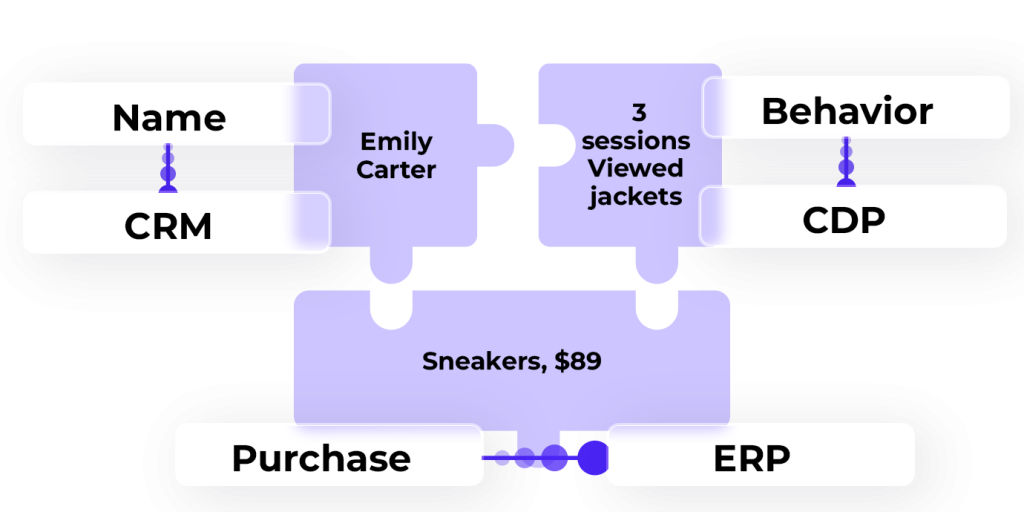
Choosing the right customer data platform (CDP) is one of the most critical decisions for modern marketing teams. As customer journeys become more complex, brands collect data from multiple channels, including websites, mobile apps, email, and offline interactions. The real challenge is not collecting this data, but unifying it and making it actionable in real time. This is where a customer data platform (CDP) becomes essential.
A customer data platform (CDP) is not just another marketing tool. It is the foundation that determines how well a brand understands its customers, how accurately it personalizes experiences, and how effectively it activates data across channels. The right CDP brings clarity and growth. The wrong one creates confusion, silos, and wasted effort.
Here’s how to choose a customer data platform (CDP) that truly supports modern, data-driven marketing.
Start With Data Unification, Not Data Collection
Many platforms promise data collection, but data collection alone does not create value. The true power of a customer data platform (CDP) lies in its ability to unify data from multiple sources into a single, accurate customer profile.
When evaluating a CDP, brands should ask whether it can connect website behavior, mobile app activity, CRM records, purchase history, email engagement, SMS interactions, and offline data and then merge them correctly. Without strong identity resolution, customers appear as multiple profiles instead of one unified individual.
A reliable customer data platform (CDP) resolves identities across devices and channels, continuously updating profiles as new data arrives. This unified view becomes the single source of truth for every marketing, analytics, and personalization decision.
Pay Close Attention to Data Accuracy and Quality Controls
A CDP amplifies whatever data it receives. If the data is wrong, outdated, or duplicated, the platform will spread those errors across every channel. This leads to irrelevant campaigns, broken personalization, and customer frustration.
When choosing a customer data platform (CDP), it’s essential to understand how it handles data quality. Does it prevent duplicate profiles? Does it manage conflicting attributes? Can it define rules for event naming, attribute priority, and data freshness? Does it update profiles in real time rather than in delayed batches?
Data accuracy is not a “nice-to-have.” It directly impacts customer trust and marketing performance. A strong CDP helps teams avoid embarrassing mistakes like sending reminders for already-completed purchases or promotions for irrelevant products.
Evaluate Integration Capabilities and Implementation Complexity
A customer data platform (CDP) must fit into your existing ecosystem, not disrupt it. Integration should be structured, flexible, and scalable. Brands should understand how the CDP connects to their website, CRM, email tools, SMS providers, push notification services, analytics platforms, and consent management systems.
At the same time, implementation should not rely heavily on manual work. If integrating a CDP requires endless spreadsheets, constant developer involvement, or ongoing manual fixes, adoption becomes slow and painful.
The right customer data platform (CDP) simplifies integration through clear data mapping, automated ingestion, and predefined connectors, allowing teams to focus on strategy rather than troubleshooting.
Address Manual Data Habits and Organizational Resistance
One of the most underestimated challenges of CDP adoption is internal resistance. Many teams are used to working with Excel files, manual exports, and static lists. Introducing a customer data platform (CDP) changes how decisions are made, moving from manual assumptions to real-time insights.
Brands should choose a CDP that supports gradual adoption. Teams need to see value quickly: cleaner data, fewer errors, faster segmentation, and more accurate targeting. When the CDP replaces repetitive manual work instead of adding complexity, resistance fades naturally.
A customer data platform (CDP) should empower teams, not intimidate them. The goal is not to remove human judgment, but to eliminate manual effort that slows down meaningful work.
Ensure the CDP Feeds Activation Channels Seamlessly
A customer data platform (CDP) is not useful if it only stores data. Its real value comes from activation. The platform must feed accurate, real-time data into email marketing, SMS campaigns, push notifications, onsite personalization, and product recommendations.
When evaluating a CDP, brands should ask how easily segments flow into campaigns. Can the same customer profile trigger an email, an SMS, and a push notification based on behavior? Can the CDP support real-time triggers like cart abandonment, price drops, wishlist activity, or inactivity?
The best customer data platform (CDP) turns insights into action instantly, ensuring that every channel reflects the customer’s most recent behavior and intent.
Understand How the CDP Contributes to Revenue Growth
A customer data platform (CDP) should have a clear, measurable impact on revenue. Unified profiles allow for better personalization, which increases conversion rates. Behavioral segmentation improves relevance, which boosts engagement. Real-time activation reduces delays, which captures intent when it’s strongest.
Brands should look for CDPs that support revenue attribution and lifecycle analysis. Can the platform show how segmentation improves retention? Can it help identify high-value customers, at-risk users, or upsell opportunities? Can it connect personalization efforts to actual sales outcomes?
A CDP that cannot demonstrate business impact becomes a cost center rather than a growth driver.
Why PersonaClick Is a Customer Data Platform (CDP) Built for Activation
PersonaClick combines real-time data unification with immediate activation. Instead of acting as a passive data warehouse, PersonaClick’s customer data platform (CDP) is designed to power action across the entire customer journey.
PersonaClick unifies behavioral, transactional, and engagement data into a single profile, continuously updated across devices and channels. This data feeds directly into segmentation, email marketing, SMS, push notifications, onsite marketing, search personalization, and product recommendations, all of which are within one platform.
Because activation is built into the CDP itself, brands don’t need to move data between disconnected tools. Every insight becomes immediately usable, and every customer interaction feels relevant and timely. Built-in compliance logic also ensures that data usage respects privacy and consent standards without manual intervention.
Choose a Customer Data Platform (CDP) That Turns Data Into Decisions
Choosing the right customer data platform (CDP) is not about storing more data; it’s about making better decisions faster. The right CDP unifies customer information, protects data quality, simplifies integration, empowers teams, activates insights across channels, and drives measurable revenue growth.
In a world where customer experience defines competitive advantage, the CDP becomes the backbone of modern marketing.
Ready to see how a customer data platform (CDP) can unify your data and power real-time engagement? Book a Demo and discover how PersonaClick turns customer data into meaningful, revenue-driving experiences.
